
The secret to staying ahead of competitors is not always flashy advertisements or new products. Simple operational procedures, such as good inventory control, can help you to improve your order management, avoid lost goods, reduce downtime and improve efficiency in pulling food or drinks from the shelves. Whether you own a restaurant or food warehouse, you need to check the programs and processes you use for inventory management to see if they align with the best practices for the industry.
- What Is Inventory Management?
- Inventory Management of the Food and Beverage Industry
- 10 Best Practices for Inventory Management in the Food and Beverage Industry
- Why Inventory Management Matters
- Common Inventory Management Challenges in the Food and Beverage Industry
- Finale Inventory’s Solutions for Inventory Management in the Food and Beverage Industry
- Finale Inventory’s Solutions for Inventory Management in the Food and Beverage Industry
- Contact Finale Inventory Today for Help With Food and Beverage Industry Inventory Management
What Is Inventory Management?
All companies that handle goods need to deal with inventory management. This sector of operations includes enumerating the inventory that enters and leaves a facility. It may also incorporate tracking goods from their purchase from a supplier through to their sale to a customer. Because every piece of inventory can represent money to a business, keeping tabs on the stock available is another way of maintaining control over finances.
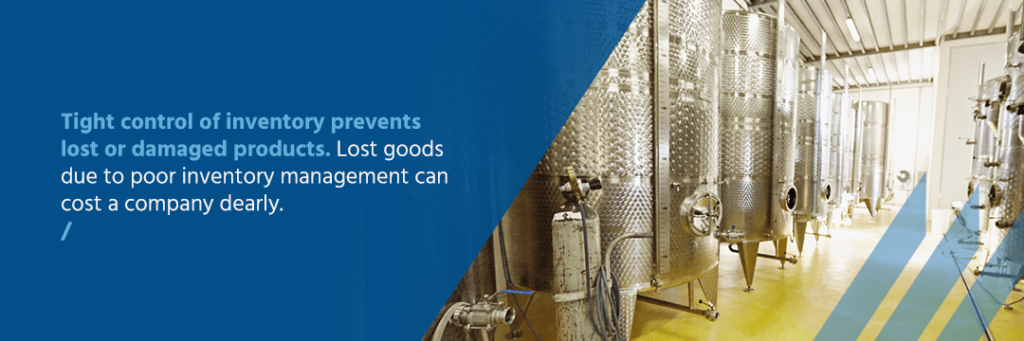
Tight control of inventory prevents lost or damaged products. Lost goods due to poor inventory management can cost a company dearly. First, the company loses money because they must replace the lost or damaged stock. Second, the business will face losing customers if they cannot fulfill orders. Third, the business loses time in making up for the missing or damaged inventory. For products with expiration dates, the chances of losing goods from poor inventory control increase.
Good inventory management skills include tracking the number and location of every item that enters and leaves the facility. For instance, if a shipment of raw materials comes in for processing into finished products, you need to know how much raw goods have entered and where they are kept until processing. Then, you need to know where you store the finished products and where they ship out to.
A variety of techniques for handling inventory exist, and not every method works for all types of facilities. Some examples of inventory handling methods include:
- First in, first out (FIFO): This method ships out or uses the oldest products first to avoid keeping products beyond expiration dates.
- Last in, first out (LIFO): Instead of sending the oldest goods out first, the most recently purchased inventory items are shipped out or used first because they are the most expensive due to prices increasing over time.
- Just-in-time (JIT) inventory: Facilities that operate with lean manufacturing methods may use JIT inventory management to keep their stock at the lowest levels possible to avoid storage costs and waste.
- Economic order quantity (EOQ): This formula determines the number of units of supplies to purchase to minimize storage costs and meet demand.
- ABC analysis: This form of inventory organization bases the purchasing and placement of products on their demand. Categories include A, B and C. A represents your products with the highest demand. Category B includes the products that are not as popular as the A category, but they still sell well for you. The remaining products go into the third category, C. Those products in category A sell the best and need larger order amounts to meet demand.
- Materials requirement planning (MRP): This method for planning supply purchases uses demand estimates to determine the production levels and supply requirements to meet those needs.
- Days sales of inventory (DSI): Some businesses calculate their inventory levels by tracking the number of days that goods spend in storage between going from supplies to sales. Days in inventory (DII) and days inventory outstanding (DIO) are two metrics of DSI a company uses to determine if they are keeping goods for too long in inventory to be profitable.
Companies typically use one method for inventory management because choosing one method and sticking to it facilitates setting up software for tracking data and investing in equipment to collect data, such as barcode scanners.
Inventory Management of the Food and Beverage Industry
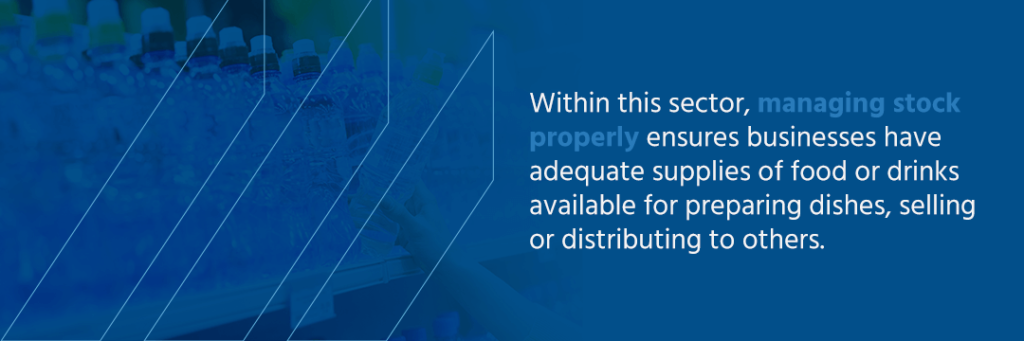
While all sectors that use inventory must keep track of it, some industries have specific requirements for maintaining their stock. Inventory management may look slightly different among businesses in the food and beverage industry. Within this sector, managing stock properly ensures businesses have adequate supplies of food or drinks available for preparing dishes, selling or distributing to others.
Other industries must keep tabs on their products. Many products they sell, though, can remain on shelves indefinitely. Undefined storage periods do not work for food and beverage companies or restaurants. The perishability of many foods and beverages introduces inventory challenges to this sector that other industries don’t have to worry about. Therefore, these businesses need tighter inventory control measures to avoid losing products and profits from expired foods or drinks.
The food and beverage industry may use several ways of counting outgoing inventory. Some businesses, such as grocery stores or other food sellers, count each item sold.
Restaurant inventory management uses a different approach for some products by using bundling. The bundling method, also known as kitting, combines several products into one sales item. For instance, in a fast-food restaurant, instead of ringing up a burger, fries and drink when a customer orders a meal deal, the cashier only counts it as a single meal, which is the bundle of the meal’s components. Kitting helps customers to save money and simplify their ordering method.
10 Best Practices for Inventory Management in the Food and Beverage Industry
The future of food and beverage industry inventory management will arise from the use of technology to improve efficiency and inventory accuracy — but even the best technology cannot make up for poor habits. High-tech solutions will only improve operations that already use best practices. Below are some ways to bolster food and beverage inventory management:
1. Organize Inventory
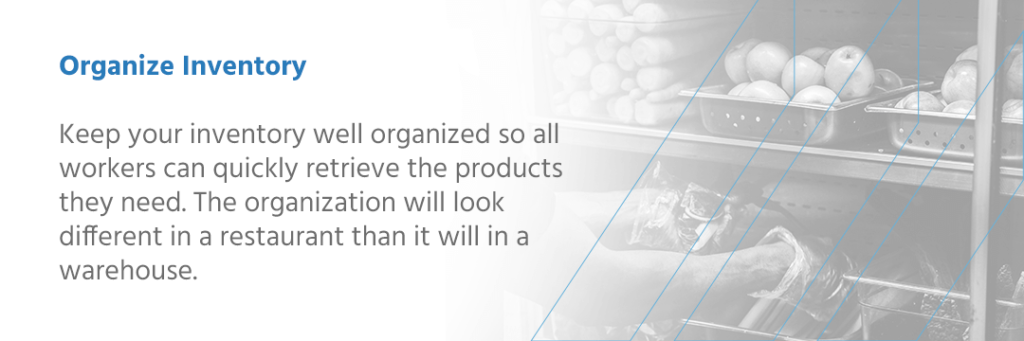
Keep your inventory well organized so all workers can quickly retrieve the products they need. The organization will look different in a restaurant than it will in a warehouse. However, the need for clearly labeled places for products will reduce wasted time finding the needed items.
For a restaurant inventory, organization means keeping similar products near each other and clearly labeled with names, dates received and expiration dates. Dry goods storage and walk-ins require organized shelves with products in their designated spaces. If possible, label shelves to make finding foods easier.
Warehouses benefit from warehouse management software (WMS) that keeps track of the number of items in different locations around a warehouse. Workers use barcode scanners to quickly enter products into the inventory at arrival. Later, they can use the same scanners to check out the products so the WMS can track the product as leaving the facility. Using this type of automated system that updates inventory in real-time and keeps counts of products in locations around the facility can improve inventory organization and reduce wasted time.
2. Maintain Low Stocks
Every inch of storage space in your restaurant or warehouse needs to have its use optimized. By maintaining low stocks to meet demand without experiencing shortages, you don’t waste space by keeping excess food or beverages on hand. Having too much of any food puts your business at risk of having to discard some of the food that you cannot sell before its expiration. Keeping stocks as low as possible can avoid the need to take this drastic, money-wasting action.
3. Use a Barcode Scanner to Avoid Errors
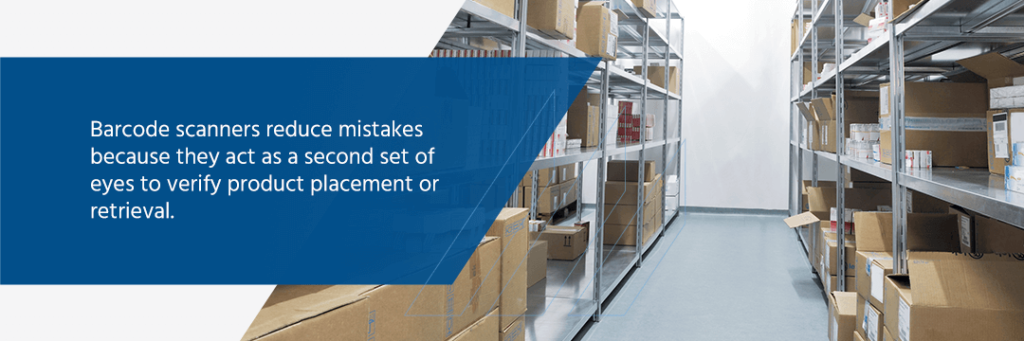
Barcode scanners reduce mistakes because they act as a second set of eyes to verify product placement or retrieval. When connected to a network and WMS, these scanners update the inventory numbers immediately. These scanners can reduce the intake time for new stock brought into a restaurant or facilitate warehouse inventory tracking. With immediately updated numbers, losses from damaged or stolen goods are easier to identify when your business does a cycle count.
4. Use Lot ID Tracking to Trace Inventory Based on Expiration Dates
Creating batches of products based on their expiration dates helps when doing lot ID tracking. Lot tracking traces the locations of goods with similar parameters. In the food and beverage sector, expiration dates are a frequently used option for creating lots. This method of tracking inventory makes it easier to get products nearing their labeled dates out the door faster, so customers obtain fresher products, and your company avoids discarding valuable stock.
5. Take Regular Inventory

Even if you use barcode scanners for every product movement in your warehouse, taking a cycle count of different items daily can expose areas of shrinkage. If you notice certain products frequently have counts that differ from those in the inventory management software, you should investigate further. See if employees are not handling products properly and discarding them due to damage, if pests have entered your facility or if you have a theft issue.
6. Verify the Quality of All Incoming Products and Update Inventory
Before scanning incoming products into your inventory with a barcode scanner or manually entering them, assess the quality first. Discard any products that do not meet your quality standards and indicate to your supplier the number of products that you had to discard. If you frequently need to throw out many products before putting them on your shelves, consider switching suppliers to stop paying for food and drinks that you throw away.
7. Use First In, First Out (FIFO)
The first in, first out (FIFO) inventory system is a preferable method of storing and retrieving goods for any facility handling perishables. This system stocks items from the backs of the shelves and pulls goods from the front. The oldest items go out first, which gets them to their final users before expiration.
8. Allow Space for Seasonal Items on Shelves and in Inventory Tracking Software
Don’t forget that your warehouse or restaurant will likely change its inventory for the seasons. Food, especially fresh produce, seafood and some meats, has seasonal availability. Therefore, you need to plan your storage area layout to accommodate new products and the rotating out of foods that go out of season. Also, allow for these changes within your inventory tracking software to keep your data on the actual products on hand up to date.
9. Train All Staff in Appropriate Inventory Management
Train all staff in your restaurant or warehouse on the proper method for stocking and pulling inventory. If you require barcode scanners for your warehouse, train everyone on how to use them. For restaurants, you should educate all staff on pulling older products off the shelf first, keeping storage areas clean and how to label foods in storage.
10. Forecast Demand With Inventory Tracking Software and Order Supplies Accordingly
One way to keep your inventory counts low is with demand forecasting and automating repurchasing. Demand forecasting starts with keeping accurate inventory counts throughout the seasons and using that data to predict surges in need. Combine forecasting with repurchasing that uses inventory counts to automatically reorder when product numbers reach a lower threshold. These systems reduce the effort in maintaining minimum counts in your inventory, whether you have a restaurant, warehouse or other food and drink facility.
Why Inventory Management Matters
Inventory management is essential for maintaining the bottom line in business. It reduces wasted space and excessive costs. The following are reasons why inventory management should become a central part of your operations plan:
Avoid Wasted Space and Products
Not knowing how much inventory is available could cost a company business by having too many products out of stock. Keeping too much stock on hand, especially items that don’t move quickly, needlessly takes up valuable storage space. This space could otherwise go to products that would provide profits. A company that manages its inventory well knows what it has, where those products are located and how quickly those items sell.
Specifically for the food and beverage industry, having too much stock on hand could ruin entire batches of perishable foods. Lost stock due to poor inventory management can happen without proper tracking of the expiration dates of goods or not accounting for temperature-controlled storage space available. Fresh and frozen foods won’t last long at room temperature.
Keep Customers Happy

Warehouses that don’t have stock on hand cannot fulfill customer orders, requiring the buyer to choose another provider. When restaurants don’t have the stock available, customers have to choose something else from the menu. Both scenarios result in unhappy customers and negative reviews.
Good inventory management that keeps adequate supplies of in-demand items on hand can reduce the problems with shortages and lost customers. And by keeping customers happy, businesses can keep staying ahead of competitors, especially when the competing companies don’t have optimized inventories.
Maintain Cashflow
The ideal inventory has products enter and leave the storage area quickly. Keeping stock levels as low as possible while ordering precise amounts to replenish the supply and meet demand are the goals of any quality inventory management system.
Common Inventory Management Challenges in the Food and Beverage Industry
The nature of storing food and drinks for use comes with several specific challenges that include avoiding waste, tracking products through the supply chain and complying with food safety regulations. However, even with these industry-specific hurdles, this sector must also deal with supply shortages, as most other industries face.
Reduce Waste
Proper storage and fast turnaround for products help reduce wasted food and beverages. However, the industry still faces the possibility of needing to discard perishable products. To overcome this, storage areas need to avoid overstocking, protect against spoilage with proper climate controls and prevent cross-contamination. The last option requires keeping foods that could contaminate each other with bacteria apart, such as meat and fresh produce. It also encompasses the separation of goods that could expose someone to allergens, such as peanuts or tree nuts.
Trace Products
Traceability of products through the supply chain is vital when a problem arises and authorities need to track the origins of the food. Without good records and an organized inventory, this process becomes difficult, leading to more widespread recalls and profit losses.
Comply With Food Safety Regulations
The Food Safety Modernization Act (FSMA) works to prevent the spread of foodborne illnesses through better handling and storage of products. Sections of this act include guidelines to improve the ability of the industry to protect food safety, increase capacity to find and respond to problems and enhance the safety of imported foods. Quality record keeping and good inventory organization can ensure food storage meets the strict requirements of the FSMA and other regulations.
Supply Shortages
Supply shortages are common throughout all industries. For food and beverage sector members, flexibility to handle shortages can mitigate the effects. Tracking products through the supply chain and improved communications with suppliers can reduce unexpected shortages from late or failed deliveries. Not running completely out of a product can also reduce the chances of shortages causing severe impacts.
Finale Inventory’s Solutions for Inventory Management in the Food and Beverage Industry
At Finale Inventory, we have helped small and medium-sized businesses manage their inventories since 2011. Our services provide customized solutions that address the most pressing inventory management concerns across all sectors. Some of the solutions we offer for the food and beverage industry to improve stock management include the following:
Lot ID Tracking
Lot ID tracking is a way to flexibly combine products into groups for easier tracing. In the food and beverage industry, this system allows you to assign lot numbers to products as they enter based on their expiration dates. This lot assigning makes FIFO inventory management easier because you will know exactly which products are in the oldest batch and which are the most recent.
Barcode Scanner Solutions
Barcode scanners are one of the simplest ways to streamline storage for any industry. With a scanner, workers reduce the time required to get products onto or off the shelves. Plus, you eliminate time and money-wasting paperwork.
Our barcode scanning software works with Android or Windows devices and Android phones. When you scan an item, it connects directly to our warehouse inventory software for improved order accuracy and automatic updates to the inventory numbers.
Kitting
Kitting, or bundling, creates bundles of goods to improve sales. When tracking inventory using sales, you need a software solution that allows for both individual product sales and bundling. Our inventory management software allows you to create bundles to save on packaging costs and improve sales opportunities. Restaurants frequently use bundling, so why not incorporate this into other food and beverage sector businesses, such as retail stores?
Subscription boxes for online retailers are a popular option. If your company sells food or beverages online, consider adding gift packs or other bundles to your sales page. You’ll reduce packaging and shipping costs while giving your customers a deal on products.
Contact Finale Inventory Today for Help With Food and Beverage Industry Inventory Management
The same lightning-fast inventory management system capable of handling the high-speed needs of e-commerce warehouses is available as a solution for inventory management across industries, including the food and beverage sector. With our barcode scanners that can read in-house or supplier-created ID tags, your workers can quickly determine that they’ve pulled the right batch of products. Restaurants can automate reordering based on the inventory tracking that includes noting when supplies reach critically low levels.
Ready to integrate Finale Inventory solutions into your operations? Contact us today to start working with our experts for a customized answer to your inventory management needs.